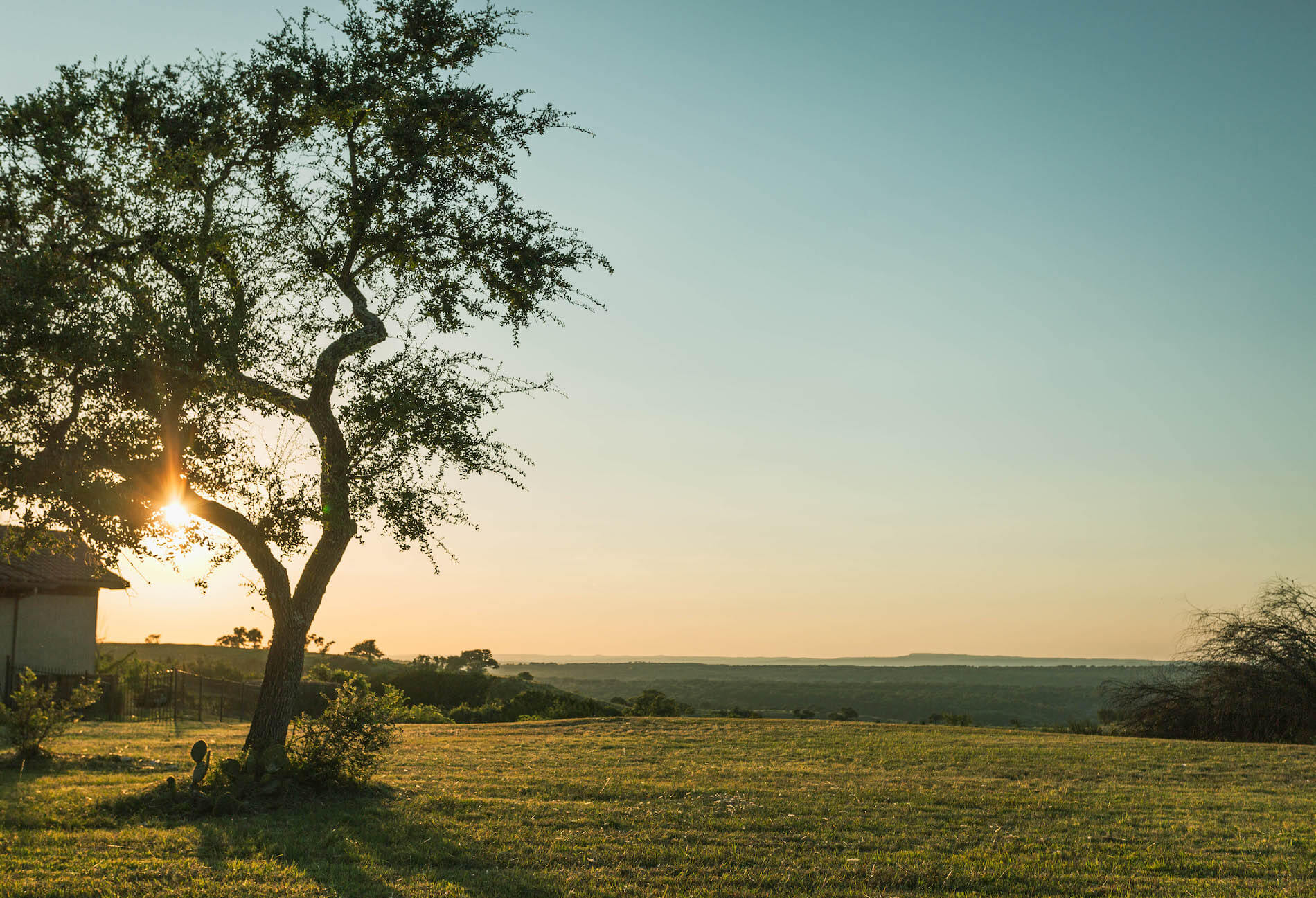
The Texas Hill Country is the pride and joy of Texas. Anyone who spends time in these rolling granite hills and clear spring-fed waters knows there’s something special here. The natural beauty is embellished by charming small Texas towns with big personalities. Hearing some of the rich historical stories of the area is like quenching our thirst on a warm summer day.
The Hill Country region includes parts of at least twenty-five counties in central Texas. Archaeological evidence suggests this area has been inhabited for over 10,000 years. Native Americans were attracted to the beauty and abundance of wildlife, but also to the flint-type stone called Edwards chert (black chert is called flint). Native Americans used this special stone to make tools and arrowheads.
EARLY MISSIONS AND TRAILS
There’s historical reference to a Spanish mission built in the Hill Country near Menard in the 1700s by soldiers and missionaries from San Antonio and Mexico. Unfortunately, the Apaches burned it down. Many of the early settlements were lost in struggles between settlers and the Plains Indians. The Pinta Trail, which extended northwest 180 miles from San Antonio to the site of Santa Cruz de San Sabá Mission in Menard, was used as a transportation route. This trail was created by Plains Indians, mostly Apache and Comanche.
John Coffee Hays and a company of Texas Rangers once defeated Yellow Wolf and his Comanche warriors in a battle along the Pinta Trail, which was used as a primary route through the Hill Country until the railroad was built near the turn of the 20th century. Several highways still parallel the old trail.
GERMAN IMMIGRANTS
Germans began populating the Texas Hill Country in the early 1800s and for many years were the largest ethnic group in the area. A professional gardener from northwestern Germany, Johann Ernst, received a land grant of 4000 acres from Stephen F. Austin’s colony in Texas in the 1830s. Ernst began writing “American Letters” embellishing the attributes of the Hill Country to influence prospective migrants in Germany. Ernst wrote of a paradise in Texas with a winterless climate like that of Sicily. He told Germans about abundant game and fish available, and the fertile Texas Hill Country land for sale for only a surveyor’s fee and no taxes. Many northwest Germans migrated here due to these persuasive letters. Little did they know that they’d have to fight Indians instead of a repressive government for land.
OTHER EARLY SETTLERS
Native Americans lived in the Hill Country for centuries, the Spanish created missions and searched for silver, and the Germans came to establish ranches and farms. Many other settlers with pioneer spirits arrived from the southeastern United States and central Europe looking for bountiful land and a fresh start. They found it in the Texas Hill Country.
A few of the area’s famous residents include Adm. Chester Nimitz, U.S. Commander in Chief of the Pacific Fleet during WWII. Lyndon Baines Johnson, the 36th U.S. President, was born on a ranch on the Perdernales River near Johnson City. Capt. Charles Schreiner immigrated to Texas in the early 1800s. He became a Texas Ranger, served in the Confederacy (most of the area supported the Union), developed banking, ranching and mercantile interests and at one time helped Kerrville become the “mohair center of the world.”
MUSEUMS OF LOCAL HISTORY
Much of the Hill Country’s early history and stories are documented in the history museums found in Fredericksburg. You can see historic structures, objects, narratives, maps and photos, among other things. The Admiral Nimitz Museum is in the old Nimitz Hotel. The nearby National Museum of the Pacific War is dedicated to documenting the complete story of WWII in the Pacific. This museum has living history re-enactments and many quality, detailed exhibits. The Pioneer Museum in Fredericksburg has a small 19th century German settlement furnished as it would have been for early settlers. Lyndon B. Johnson’s various homes and furnishings are in Johnson City and also open for tours.
BELVEDERE
Belvedere on Hamilton Pool Road appreciates the rich, colorful history of the Texas Hill Country. Belvedere is a community of custom homes on 443 acres that includes an 80-acre nature preserve. This gated, upscale community offers a state of belonging and cheerful well-being. Visit us on Belvedere’s website, or find us on Facebook, Twitter or Pinterest.